Cat drooling when purring - what does it mean?


Enter a keyword below to search for articles and products.
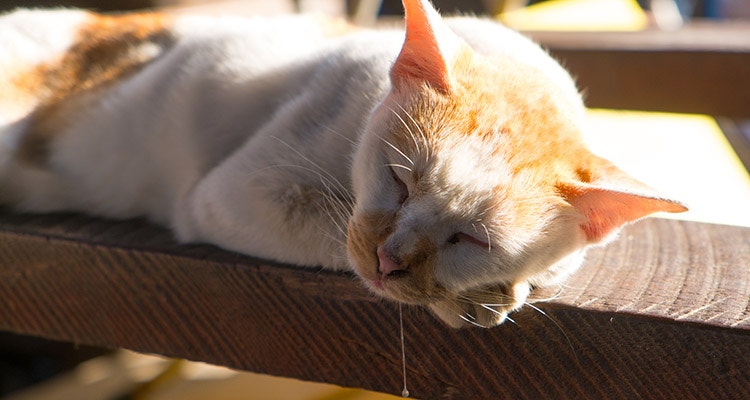
If your cat drools when it’s purring, particularly while you’re stroking it, it’s usually a sign that it’s relaxed and content. However, if they are suddenly or unusually dribbling when they purr, it’s worth speaking to your vet, especially if they are exhibiting unusual behaviour along with dribbling. This is because it can sometimes be a sign of a health problem or them being stressed.
In this article, we’ll look at the different causes of cat drooling when purring, why it happens, and when you should speak to your vet.
Yes, it’s normal, and usually harmless for cats to drool when purring.
A little bit of drooling when purring, or in a state of deep relaxation, is very common. Many cats show some mild happiness-related dribbling, but not all cats do it, and some dribble more than others. It often depends on the breed and the different individual emotional responses.
If they’ve always dribbled a little as they purr when you stroke them, or if they’re very excited, and your cat seems happy and content, it’s usually nothing to worry about.
Cats drool when purring because of a combination of psychological and physical reasons. Their mouth relaxes, and their saliva glands are triggered by endorphins being released, which causes them to dribble. This tends to happen when they are excited, being stroked or dozing.
Kittens often knead and purr while feeding, which has led some experts to think that some cats keep this habit as adults when they’re feeling content.
Mild dribbling is quite different from intense drooling, which may be heavier and happen when cats aren’t being stroked and purring. If in doubt, speak to your vet.
A common reason why cats drool when you pet or stroke them is that you are helping them to be in a happy, content state.
Physical affection can trigger a cat to start drooling with happiness, accompanied by very relaxed muscles, and they may be subtly showing you how much they enjoy your attention.
If your cat dribbles when purring – as long as it’s short-lived – and accompanied by relaxed body language, such as gentle head rubbing against you, then it’s a great sign of feline joy.
Some experts think cat drooling through happiness is related to kittenhood, as they would knead and rub against their mother to stimulate milk production.
Giving your cat catnip may also sometimes cause your cat to dribble. The effect of catnip commonly causes cats to salivate in a state of euphoria. As long as it’s used in moderation, this is usually nothing to worry about.
If your cat is drooling more than usual and they’re not relaxed or purring, they may have hypersalivation (also called psytalism). Some red flags to look out for include the following:
It’s also important to be wary of:
These symptoms may point to a range of problems, including:
If you notice any of the signs above, contact your vet.
Drooling can also be a sign of oral pain, which can be the result of damaged teeth, an injured mouth or gum disease. Cats are stoic animals and can hide pain well, so you shouldn’t wait for obvious signs before speaking to your vet.
If you notice any of the following signs, please contact your vet for an oral examination:
Looking after your cat’s dental care by using things such as Dentabites can help to prevent your cat having issues with their teeth, mouth, and/or gums.
If your cat is not purring or showing relaxed body language when they are drooling, look at how they are behaving. If they seem stressed, try to remove the source of their anxiety to see if the drooling improves. When dealing with a stressed cat, having a safe, calm place for them to retreat to, or using pheromone plug-ins, may help.
Look out for signs of illness, pain or tooth problems. Cat dribbling can be caused by mouth problems, trauma, kidney problems, heatstroke, or feeling sick. It can also be a side effect of some medications, so refer to the leaflet if your cat is taking any current medicines.
Cat drooling is often harmless, especially when your cat is relaxed and purring, but some signs shouldn’t wait.
Contact a vet straight away if:
Book an appointment soon if you notice:
Before you call, note down when the drooling started, how much there is, any smell or change in colour, and any other symptoms, such as hissing. It gives your vet a head start. They will usually check your cat’s mouth and teeth, look for anything stuck, and suggest further tests if they need to know more.
Clear watery drool is simply saliva, and a little bit coming from your cat’s mouth (provided they’re relaxed and purring) is nothing to worry about. If the drool continues when they aren’t relaxed and aren’t purring (alongside other symptoms), then there may be something else happening. See “When is cat drooling a sign something is wrong?” for the full list of warning signs.
The combination of drooling and being uninterested in food might mean that your cat has:
Only a vet can tell which it is, so please contact yours as soon as possible. The “When to see a vet about cat drooling” section covers what to note down and what they may check.
Yes, stress can make a cat drool, and it can look very different from content, happy drooling. If your cat is stressed, it may seem tense and wide-eyed and isn’t purring. Some common reasons for your cat being stressed include car journeys, vet visits, loud noises, a new home or changes to routine. See the “Stress, illness and medication” section for what can help.
Sudden, heavy drooling is something to act on quickly rather than wait out. Stay calm, keep your cat safe and quiet, and avoid home treatments. Contact a vet, and have ready anything your cat may have eaten or been near, such as plants, cleaning products or medication. See “When to see a vet about cat drooling” for more.
*Based on PRS In-Vivo study (2024) on quality and enjoyment perceptions of 200 cat owners (UK)

Subscribe to our newsletter to receive a welcome discount, useful tips and exciting news about our products.
Discount code valid until 31.12.2026 on a purchase of WHISKAS® products on www.zooplus.co.uk. Zooplus minimum order £10, code cannot be used in conjunction with other offers or discounts. Code valid for one time use.


Click to buy from any of the retailers below